Amazon Abandons Northern Virginia AI Data Center Plans After Local Resistance
The tech giant will convert a 122-acre Loudoun County site into residential and mixed-use development, donating land and funds to address community concerns over energy and noise.
By Naledi Dlamini ·
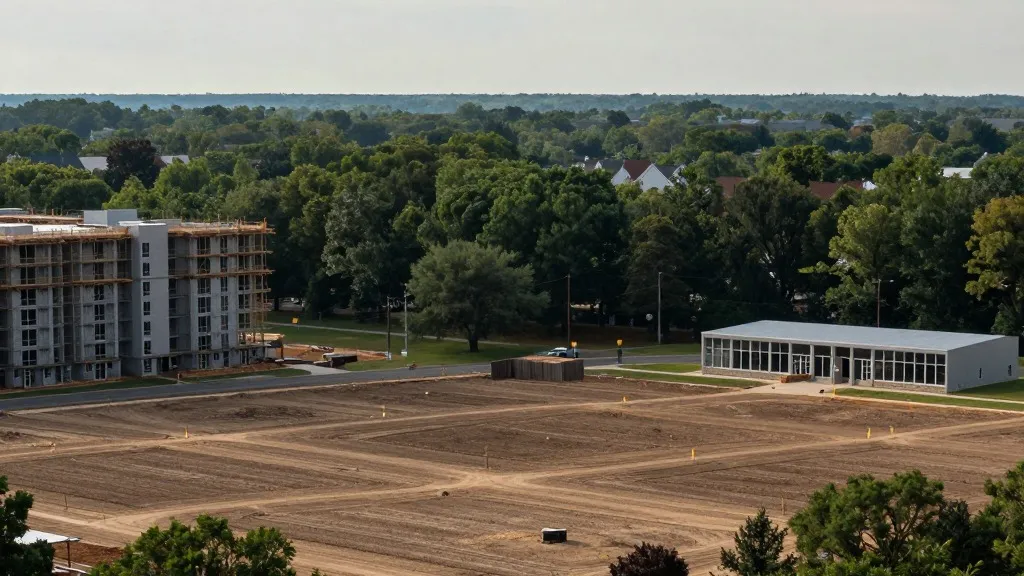
Amazon has officially withdrawn its proposal to construct four new data centers on a former George Washington University campus in Loudoun County, Virginia. In a significant shift following sustained local opposition, the company announced it will repurpose the majority of the 122-acre property for mixed-use and residential development. The decision marks a notable departure from the initial plans and responds to growing scrutiny regarding the environmental and infrastructural impacts of expanding data center infrastructure in the region.
As part of the settlement, Amazon will transfer 25 acres of the land to Loudoun County for the construction of a community arts center and a new recreational facility. Additionally, the company has committed a $5 million contribution to the county’s housing fund. These concessions aim to address specific grievances raised by residents, who had expressed concerns about the noise levels associated with data center operations and the substantial power requirements necessary to keep such facilities running.
The reversal occurs in a county already known as "Data Center Alley," which hosts the largest concentration of data centers globally. Amazon originally submitted its development proposal in July of this year. By September, Amazon executives met with Phyllis J. Randall, Chair of the Loudoun County Board of Supervisors. During these discussions, county officials suggested that the company might consider an alternative use for the land rather than proceeding with the data center buildout.
Josh Weissman, Amazon’s vice president of data center development, explained that the company was eager to acquire the former university campus when the opportunity first arose. However, he acknowledged that the company carefully weighed the county’s "pointed concerns about data center development at this particular site." Weissman noted that while Amazon viewed the property’s legal development potential differently than the county did, both parties concluded that a shared vision would yield a better outcome than pursuing costly litigation.
The decision reflects broader tensions surrounding the rapid expansion of data centers driven by the surge in artificial intelligence usage. While cloud-based services and storage systems have historically driven demand, the recent boom in AI has necessitated larger facilities and increased energy consumption. This has led to local opposition, with communities wary of spikes in electricity prices and other environmental impacts, including water shortages and deforestation.
In response to these rising costs, President Donald Trump recently called for data center builders and AI hyperscalers to pay local communities a dividend to offset energy-related price increases. In a social media post, the President stated that data centers would be required to generate their own electricity and, in some cases, sell excess energy back to the local grid. These federal signals align with the local pressure that influenced Amazon’s decision in Loudoun County.
Local officials have framed the outcome as a success of collaborative negotiation. In a statement, Randall emphasized that by choosing "dialogue over reflexive disagreement," the county and Amazon created a valuable opportunity for the community. She highlighted that the agreement will provide new spaces for residents to gather, create, and play, while also facilitating the construction of more attainable homes for working families.
The shift in strategy highlights the evolving relationship between tech giants and local governments in areas with dense data center infrastructure. As demand for AI computing power continues to outpace available energy capacity, developers are increasingly forced to consider the long-term social and economic implications of their projects. The Loudoun County deal sets a precedent for how major tech firms might navigate similar conflicts in other high-density regions.
While the specific details of the residential development are still being finalized, the core agreement stands: the 122-acre site will no longer be dominated by server farms. Instead, it will be transformed into a mixed-use community with dedicated public spaces and affordable housing contributions. This move underscores the growing influence of local stakeholders in shaping the physical footprint of the digital economy.
Source: Tom's Hardware