Apple Raises iPhone Duo Production Targets by Over 40% Amid Supply Crunch
The tech giant has significantly expanded its manufacturing goals for its first folding smartphone after initial delivery delays signaled unprecedented consumer interest.
By Rafael Ortega ·
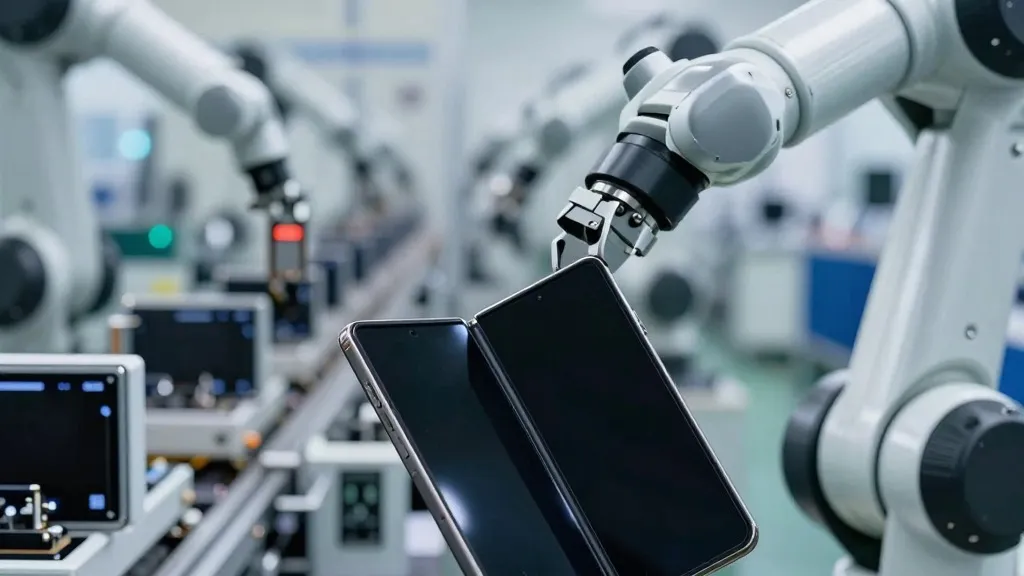
The launch of Apple’s first folding smartphone has been marked by an immediate and sharp tension between consumer demand and production capacity. Within minutes of the pre-order window opening this past Friday, customers across the Great Lakes and Ohio Valley regions began reporting extended shipping timelines, a development that quickly clouded the initial narrative of the product’s market reception. The discrepancy between the expected instant availability and the delayed fulfillment raised immediate questions about whether the bottleneck was a sign of overwhelming popularity or a failure in logistics planning.
Recent supply chain analyses suggest that the latter explanation is unlikely, pointing instead to a robust surge in orders that has forced Apple to adjust its strategic outlook. According to reports from DigiTimes, which draws on information from industry sources, the company has increased its manufacturing orders for the iPhone Duo by more than 40 percent. This substantial upward revision is a direct response to what Apple has characterized as extraordinary demand for the new device, effectively confirming that the initial delivery slippage was driven by consumer enthusiasm rather than insufficient inventory.
When the pre-orders became available on Friday, the reaction was swift. Early buyers noted that their estimated delivery dates shifted almost instantly, with some customers seeing their expected arrival pushed to late January. While Apple attributed these delays to the unprecedented volume of orders, critics noted that the company frequently employs the term "extraordinary" to describe demand during major iPhone launches. To manage the influx and mitigate the risk of resale arbitrage, Apple implemented a limit allowing each customer to purchase a maximum of two units.
As the initial rush settled, a pattern emerged where some of the earliest orders were subsequently updated with earlier shipping estimates. This shift in logistics aligns with the latest intelligence from the supply chain, which indicates that Apple is actively ramping up production to meet the revised forecasts. The move suggests that the company is confident in the sustained interest for the new hardware category and is scaling its operations accordingly to prevent further delays in the coming months.
The most significant financial implication of this trend is reflected in Apple’s revised shipment targets. The company has raised its projected unit sales for the iPhone Duo from 9.7 million to 14 million units over the first twelve months of the product’s lifecycle. This adjustment underscores a strong belief that the folding form factor will maintain momentum well beyond the initial launch window, rather than serving as a one-time novelty purchase.
However, the rapid expansion of the device base has introduced challenges beyond hardware logistics. Early adopters are currently navigating an ecosystem where third-party applications have not yet been fully optimized for the unique display configuration of the iPhone Duo. While Apple maintains that the situation is improving rapidly as developers adapt their software, the lack of seamless app support remains a notable friction point for users in the first week of ownership.
Independent reviews from the first week of usage have consistently highlighted app compatibility as one of the five primary concerns for new users. This feedback loop suggests that while the hardware is in high demand, the software ecosystem is still in a catch-up phase. Developers are prioritizing updates, but the lag between hardware release and full software optimization is a recurring theme in the early stages of new form factor introductions.
In parallel with the production ramp-up, Apple is also addressing a key design compromise in the current model. The initial iPhone Duo utilized Touch ID for security, a decision that was viewed by many as a step backward from the Face ID standard established in previous generations. Recent reports indicate that Apple is already testing prototypes for the next iteration, the iPhone Duo 2, which are expected to incorporate Face ID technology, signaling an intent to restore that biometric feature in the subsequent release.
For now, the focus remains on clearing the backlog of orders. The increase in production targets to 14 million units represents a significant operational shift for the company, aiming to balance the high volume of incoming orders with the need for efficient distribution. As the first wave of devices reaches consumers in the Great Lakes and Ohio Valley regions, the market will continue to observe whether the initial hype translates into long-term satisfaction or if the early logistical hurdles will temper the momentum.
The situation serves as a clear indicator of Apple’s confidence in the folding phone segment. By aggressively adjusting its supply chain in response to real-time data, the company is attempting to ensure that the initial spike in interest does not lead to a prolonged period of customer dissatisfaction. The coming weeks will determine whether the revised production goals are sufficient to stabilize delivery times and solidify the iPhone Duo’s position in the market.
Source: 9to5Mac