Lula Wins Fourth Term in Brazil, Defying Regional Trend
The 81-year-old incumbent secured 51.8 percent of the vote after a two-hour polling extension sparked debate over the legitimacy of the result.
By Lucy James ·
Brazil’s electoral court confirmed on Sunday that President Luiz Inácio Lula da Silva has secured a fourth term in office.
With all votes counted, Lula holds a lead of nearly 4.4 million votes over Flávio Bolsonaro. This gives Lula 51.8 percent of the total vote, a result that maintains a degree of independence between Latin America’s largest economy and Washington.
The victory follows a chaotic final night at polling stations across the country. The turmoil began when Supreme Court Justice Cristiano Zanin ruled three minutes before the scheduled closing time to extend voting by two hours. Zanin granted the extension following requests from both candidates. Lula’s request cited transportation issues in São Paulo and Salvador, while Bolsonaro pointed to heavy rains in the southern region. The delay pushed the vote tallying back by two hours and left uncertainty about how many stations remained open.
Lula’s path to this election was unconventional. He trailed Bolsonaro by more than 2.2 million votes in the first round earlier this month. His victory marks the first time since the military dictatorship ended in 1985 that the second-highest vote-getter in the first round has won the presidency. To close the gap, Lula reorganized his campaign to appeal to younger voters and increased government spending on incentives to attract undecided voters.
The election results have placed left-of-centre leaders in the two most populous nations in Latin America, Brazil and Mexico. This outcome positions the region’s largest economy, with a GDP of 2.6 trillion US dollars, to remain independent of the United States despite increased tariffs imposed by President Donald Trump. Lula’s win runs counter to a regional trend where right-of-centre candidates allied with Trump have been gaining power.
In a speech to supporters, Lula expressed gratitude and pledged to respect all Brazilians regardless of gender or religion. He characterized the result as a defeat for denialism and lies. He stated that the country would not accept being anyone's backyard. Lula is scheduled to turn 81 on Tuesday, making him one of the oldest presidents in the Americas alongside Trump and Nicaragua’s Daniel Ortega.
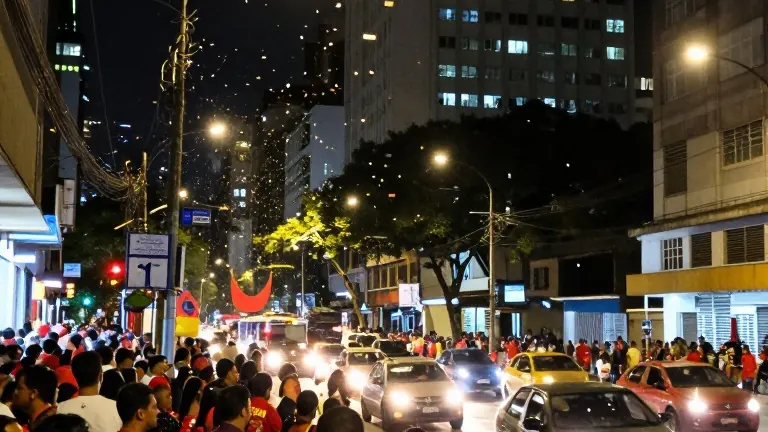
Celebrations erupted in major cities as the results were announced. In São Paulo, hundreds of supporters gathered on the city’s main artery. Lula was seen celebrating with his wife, Rosângela Lula da Silva, while wearing red star-shaped glasses. In Rio de Janeiro, supporters in red shirts cheered, and cars honked as the outcome became clear.
Flávio Bolsonaro has not yet formally conceded. He stated that he wants the election annulled due to the last-minute extension. An ally of Bolsonaro, Nikolas Ferreira, noted that Justice Zanin, who made the ruling, is Lula’s former lawyer. In Brasilia, volunteers who oversaw the vote count debated whether to stay after the announcement. Most left 15 to 20 minutes after polls closed and had provided count information to electoral authorities.
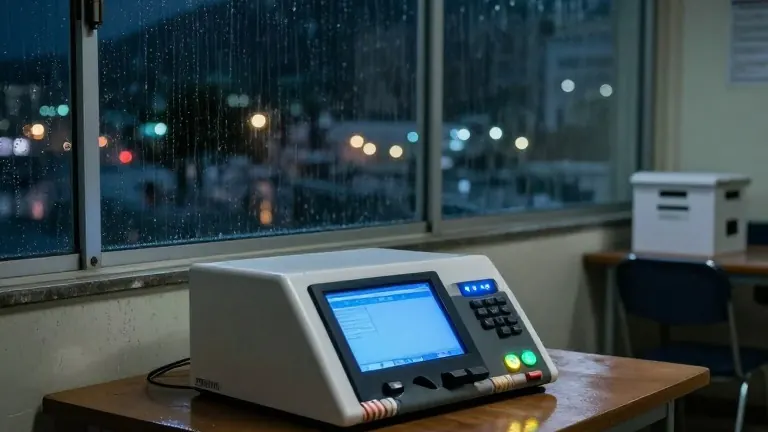
In Rio de Janeiro, voting machines at one station were switched off minutes after the scheduled close and could not be turned back on. Rodrigo Valentim, a 51-year-old Bolsonaro supporter, expressed concern that another Lula government would harm the economy. He pointed to the positive reaction of financial markets to the first-round result, where Bolsonaro initially led. Both candidates have faced corruption suspicions involving family members, with Lula having served 580 days in prison on convictions that were later annulled.
Lula’s next term is set to begin on January 5, 2027. The election was driven by concerns over the cost of living and security. Bolsonaro focused on a tough-on-crime approach and lowering food costs, while Lula emphasized his legacy and democratic values. This victory likely concludes the political career of the veteran leader who began his career as a union leader in the 1970s.
Source: CBC News