2027: The New Deadline for Tesla's Limited Autonomy Promise
Tesla has set a 2027 target for unsupervised driving, but the feature will initially be restricted to specific urban zones rather than offering nationwide freedom.
By Camila Rodriguez ·
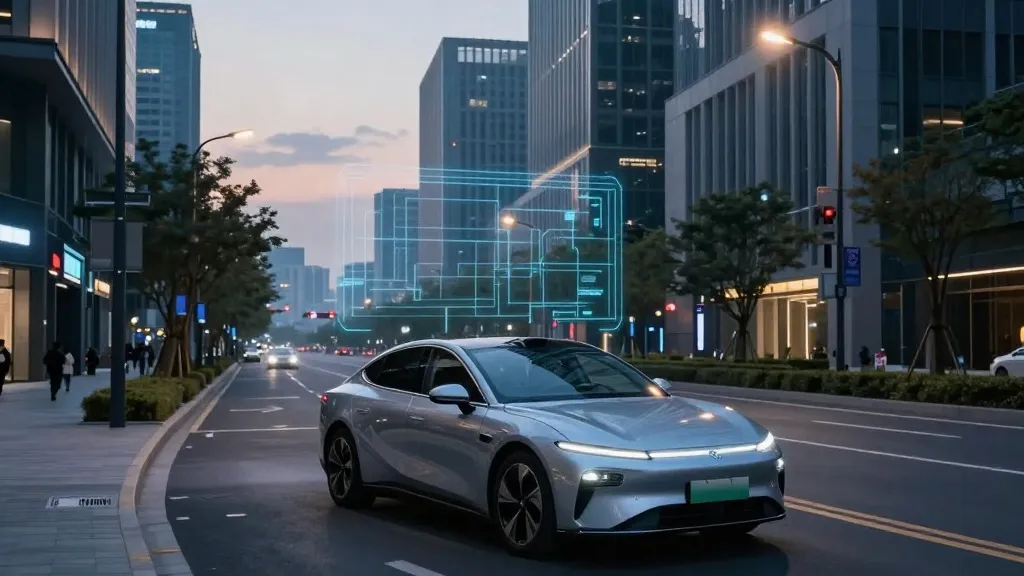
Tesla has long marketed its Full Self-Driving technology as a path to complete automotive autonomy, yet the company has recently narrowed its definition of that promise. On a Q3 2026 earnings call held today, executives confirmed that unsupervised driving for customer-owned vehicles is now targeted for the second quarter of 2027. This date marks the latest in a series of shifting timelines that the company has presented to shareholders over the past decade.
The details provided by Ashok Elluswamy, Tesla’s AI chief, clarify that the initial rollout will not function as a universal software update. Instead, owners will effectively add their personal vehicles to Tesla’s managed Robotaxi fleet. This means the car will only drive itself without supervision within the specific geographic boundaries where the company’s existing Robotaxi service already operates. It is a distinct departure from the original sales pitch, which suggested a car that could eventually drive its owner anywhere via a simple download.
The geographic limitations of this plan are significant. Tesla’s Robotaxi service currently covers only six metropolitan areas in the United States, and even within those cities, the active zones are relatively small. For instance, the service in Miami primarily covers West Miami and a corridor toward Doral and Sweetwater. Similar restricted geofences were launched in Orlando and Tampa in July. In these areas, the vehicles stick to low-speed routes and generally avoid highways and complex urban environments. Notably, the service in the Bay Area is not yet fully unsupervised because California regulations require a safety driver in every vehicle, a requirement Tesla has not waived in its current operational framework.
The scale of the current operation remains modest compared to broader industry expectations. Tesla reported that its Robotaxi fleet reached nearly two million cumulative unsupervised miles by the end of the third quarter, a figure that includes the Cybercab model which joined the Austin fleet just a month prior. Third-party tracking data from earlier this year indicated that only dozens of fully driverless Teslas are actually on the road, a number far below the hundreds of thousands previously discussed by leadership. Competitor Waymo, which entered both Orlando and Tampa before Tesla, has already logged over three million miles in driverless operation.
The gap between the original promise and the current product definition has raised questions among investors. Retail shareholders asked directly when they could expect unsupervised FSD in their own cars, a query supported by approximately 1.1 million shares. While CEO Elon Musk had stated in July 2025 that unsupervised personal use would arrive in certain geographies by the end of that year, the new Q2 2027 timeline suggests a more cautious approach. Furthermore, owners of the older HW3 hardware have been informed that their vehicles cannot run unsupervised FSD at all, with no clear upgrade path currently defined.
Elluswamy identified safety as the primary bottleneck for expansion, noting that the company is limiting itself to lower-speed roads and less complex environments until it can resolve these issues. He expressed confidence that these safety hurdles could be addressed by the following year, though he acknowledged the uncertainty involved. For consumers, this shift means the goal has moved from a car that drives you anywhere to a car that can work as a Robotaxi within a controlled zone, potentially limiting the practical utility of the feature for many owners outside these specific urban pockets.
The earnings call highlighted the ongoing tension between Tesla’s ambitious public statements and the technical realities of autonomous driving. While the company continues to make incremental progress in miles driven and geographic expansion, the core product offering for existing FSD buyers remains narrower than originally advertised. As the Q2 2027 deadline approaches, the focus will likely remain on how quickly Tesla can expand its geofenced zones and whether the safety data supports a broader rollout beyond the current limited areas.
Source: Electrek