Tesla to Build Proprietary Maps for FSD After Years of Dismissing the Technology
Tesla's AI head announced on the Q3 earnings call that the company is developing its own mapping architecture to correct persistent navigation errors, marking a significant strategic reversal.
By Rahul Mehta ·
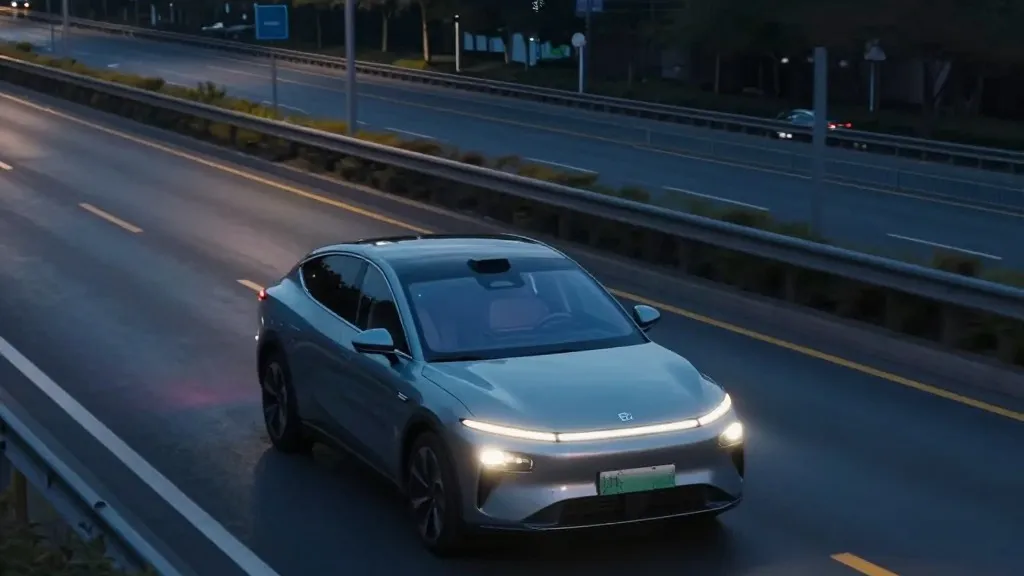
Tesla has officially confirmed it is constructing its own internal mapping system to address widespread failures in its Full Self-Driving (FSD) software. The announcement, made by Ashok Elluswamy, the company's Vice President of AI, during the Q3 2026 earnings call, signals a definitive pivot in how the automaker approaches autonomous navigation. This move directly contradicts the long-standing corporate stance that self-driving systems relying on external data are inherently fragile, suggesting that the company's vision-only approach requires significant structural support to function reliably.
The new architecture is designed to leverage data collected collectively by Tesla’s global fleet. According to Elluswamy, the system will not only map physical road infrastructure but also learn individual driver preferences and respond to voice commands. The rollout is staged, with the technology first handling trip initiation and termination in the upcoming FSD v15 update. Over the subsequent months, Tesla plans to expand the map's role to include full navigation, parking assistance, and destination management.
The decision stems directly from shareholder feedback. During the earnings call Q&A, a retail investor highlighted that mapping issues remain a primary pain point for FSD users, specifically citing speed limit recognition, parking accuracy, and route selection as the top three areas of failure. The investor questioned why Tesla continued to rely on third-party map providers. Elluswamy agreed with the critique, stating that the company should no longer depend on external entities for this critical data.
This shift is particularly notable given the company's history. In 2015, Tesla initially touted high-precision mapping capabilities, claiming a level of granularity far exceeding standard navigation tools. However, by the 2019 Autonomy Day, CEO Elon Musk had largely reversed course, labeling high-precision lane maps a "huge mistake" and a "really bad idea" that made systems "extremely brittle." At that time, Musk also dismissed lidar as a "fool’s errand," arguing that cameras and AI alone were sufficient for driving anywhere. Seven years later, the company is building a fleet-derived map layer specifically to correct errors its vision system frequently makes.
The specific issues Tesla is targeting involve basic environmental understanding. Speed limits, parking spots, and route logic are fundamental to safe driving, yet FSD continues to struggle with them. The most visible failure is the misreading of speed limit signs. In a recent analysis, a Belgian road safety group found that FSD exceeded the limit in 55% of 30 km/h zones in Brussels, averaging 44 km/h. The error was often due to the car’s display showing a 50 km/h limit. In the United States, the NHTSA is currently weighing an investigation into claims that Tesla Robotaxis speed through active school zones, affecting approximately 1,000 Model Y and Cybercab vehicles.
This development brings Tesla’s operational model closer to that of its primary competitor, Waymo. Waymo has long utilized sensor-equipped vehicles to map cities before launching service, continuously updating those maps as the fleet operates. Tesla’s new plan mirrors this logic: cars collect visual data to feed a centralized map that improves driving for the entire fleet. While Waymo’s vehicles are equipped with lidar, Tesla’s approach relies on camera data, though the strategic similarity in using fleet-built maps is evident.
The stakes for Tesla are high, as the company is currently operating its Robotaxi service in small, geofenced areas on a city-by-city basis. While Tesla is not claiming centimeter-level HD maps today, a fleet-built system that becomes increasingly detailed could easily evolve in that direction. The admission that maps are necessary undermines the earlier narrative that Tesla’s vision system was a universal solution. For investors and consumers in the Great Lakes and Ohio Valley regions, the news suggests that while the technology may improve, the path to unsupervised driving in consumer vehicles remains a work in progress, with the company still refining its foundational data infrastructure.
Ultimately, the shift acknowledges that a map built from millions of vehicles offers a distinct advantage. If the new system successfully resolves the speed limit and routing errors, it will be a tangible improvement for users and other road users. However, the gap between the initial promises of vision-only autonomy and the current reality of map-dependent navigation remains a central point of discussion as Tesla pushes toward its Q2 2027 goals for unsupervised FSD.
Source: Electrek