China stock selloff hits $2.4 trillion
Beijing's AI race is straining the market as consumer spending lags and Washington tightens export controls.
By Beatrice Patterson ·
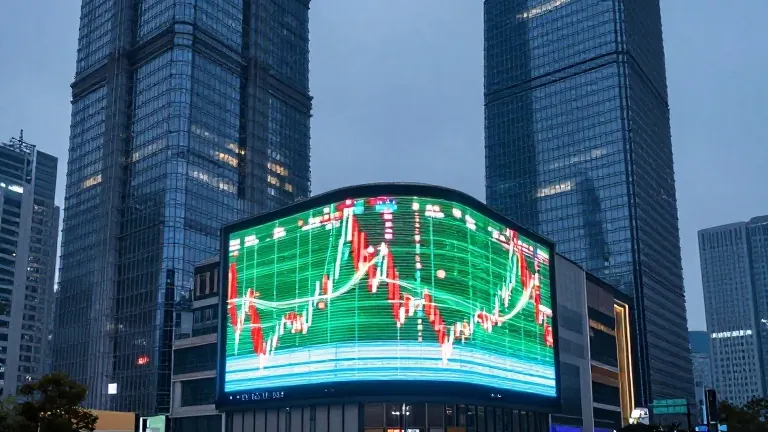
Chinese equity markets have shed $2.4 trillion in value since May, a decline driven by investor anxiety over the country's ability to sustain its artificial intelligence boom. The STAR 50 Index, which tracks technology firms on the Shanghai stock exchange, fell 40% since June. Broader indexes of major companies dropped approximately 20% over the same period.
AI stocks now represent more than 40% of the total market value in China and Hong Kong, according to Goldman Sachs. This concentration means that any decline in the sector sends shockwaves through the domestic market. The sell-off suggests that government efforts to boost technology industries have outpaced the actual economic capacity to support them.
Beijing has poured capital into the sector, including a 60 billion yuan state-backed AI investment fund that began funding domestic developers this month. Despite this injection of state capital, Chinese consumers remain reluctant to spend. This weak domestic demand prevents many tech companies from turning a profit, creating a structural gap between investment and revenue.
Dan Wang, the China director for the Eurasia Group, identified profit margins and rising US interest rates as key stressors. She noted that China's domestic demand is weak. "This year, the profit margin is not as good as expected," Wang said. She described a "general anxiety" among tech firms regarding whether the state-backed model will succeed against a backdrop of sluggish consumer spending.
External pressure from the United States compounds these domestic issues. Washington has banned Chinese humanoid robots citing national security risks and is considering restrictions on Chinese components in data centers. Because China relies heavily on exports, these US limits hurt domestic companies that already struggle to sell enough products at home.
Beijing is doubling down on robotics, or embodied AI, as a solution to demographic challenges like an aging population and a shrinking workforce. However, current demand for robotics is driven by government agencies and research institutions rather than households. Products remain too expensive and impractical for general home use. Shares in Unitree, a leading robot maker, have halved since the company started trading in August.
Wang stated that embodied intelligence does not yet look like it will generate mass market profits. Thin margins and weak demand continue to fuel uncertainty in the sector. The government has tried to keep capital domestic by restricting overseas investment, with new regulations taking effect on December 1. These measures have not yet translated into greater investment in Chinese markets.
Optimism remains in specific areas such as satellite technology, which benefits from long-term military support. Globally, the AI boom is expected to continue for at least another year. In the US, Anthropic filed paperwork for an IPO that could raise up to $100 billion, a scale of debut that China does not currently match.
Chinese policymakers face a political constraint as they consider stimulus options. Top officials of the Chinese Communist Party are gathering this week for the fifth plenum to prepare for next year's 21st Party Congress. The Congress is expected to confirm Xi Jinping for a fourth term. Leaders are avoiding risky policy moves before this milestone to prevent instability.
Wang warned that any stimulus measure would be high risk in the current political climate. Accountability for failure would fall on the policy maker. "What if it doesn't work out? Then whoever came up with that policy, that guy would be held accountable," she said.
Source: The Guardian